
Introduction
Relocating to a new home or city is an exciting milestone. But when your move involves delicate glassware, priceless artwork, or expensive electronics, that excitement can quickly turn into anxiety. Fragile and high-value items are among the most vulnerable belongings during any move, and the risks are real: breakage, deep scratches, moisture damage, and careless mishandling can destroy in seconds what took years to acquire.
This is precisely why fragile item packing deserves a dedicated approach, one that goes well beyond tossing things into a cardboard box. Industry-approved packing standards exist for a reason and understanding them can mean the difference between a smooth, damage-free move and a costly nightmare. Whether you are handling the packing yourself or hiring professional packing services, this guide will walk you through everything you need to know.
What Are Fragile and High-Value Items?
Before diving into packing techniques, it helps to clearly identify what falls into the fragile or high-value category. Many people underestimate just how many items in their home require special attention during relocation.
Common examples include:
- Glassware and crockery: wine glasses, decorative bowls, fine China
- Artwork and paintings: framed canvases, prints, sculptures
- Antiques and collectibles: vintage furniture, rare figurines, heirloom pieces
- Crystal items: chandeliers, decorative crystals, crystal glassware
- Mirrors full-length mirrors, decorative wall mirrors
- Electronics laptops, cameras, gaming systems, home theatre setups
- Televisions, especially large flat-screen and OLED panels
- Musical instruments guitars, violins, keyboards
- Luxury furniture marble-topped tables, handcrafted wooden cabinets
- Jewellery and personal valuables: watches, gemstones, heirloom pieces
Each of these categories carries unique risks during transit. Recognizing them is the first step toward safe packing.
Why Standard Packing Is Not Enough
Many people assume that any box with some newspaper stuffed inside is sufficient for moving. Unfortunately, standard packing methods are completely inadequate for fragile or expensive belongings.
Shock and vibration during transit are constant. Every bump, sharp turn, or sudden brake creates force that ripples through stacked boxes. Without proper cushioning, even a short drive across town can crack a ceramic vase or shatter a glass figurine.
Loading and unloading risks add another layer of danger. Boxes get stacked, shifted, and sometimes dropped. Without structural reinforcement, even a well-packed item can be crushed under the weight of heavier boxes placed on top.
Temperature and humidity fluctuations are particularly harmful to wood, canvas, electronics, and certain metals. A hot moving truck on a summer day or a damp container during rain can warp wooden antiques, cause electronic components to malfunction, or damage painted surfaces.
Long-distance transportation challenges multiply all of these risks. The longer the journey, the more exposure your belongings have to vibration, temperature changes, and handling by multiple people. This is why relocation packing tips for international or interstate moves always emphasize higher protection standards.
Essential Packing Standards for Fragile Items
Professional movers and packers follow a set of industry-recognized standards designed to minimize damage risk. Here are the most important ones:
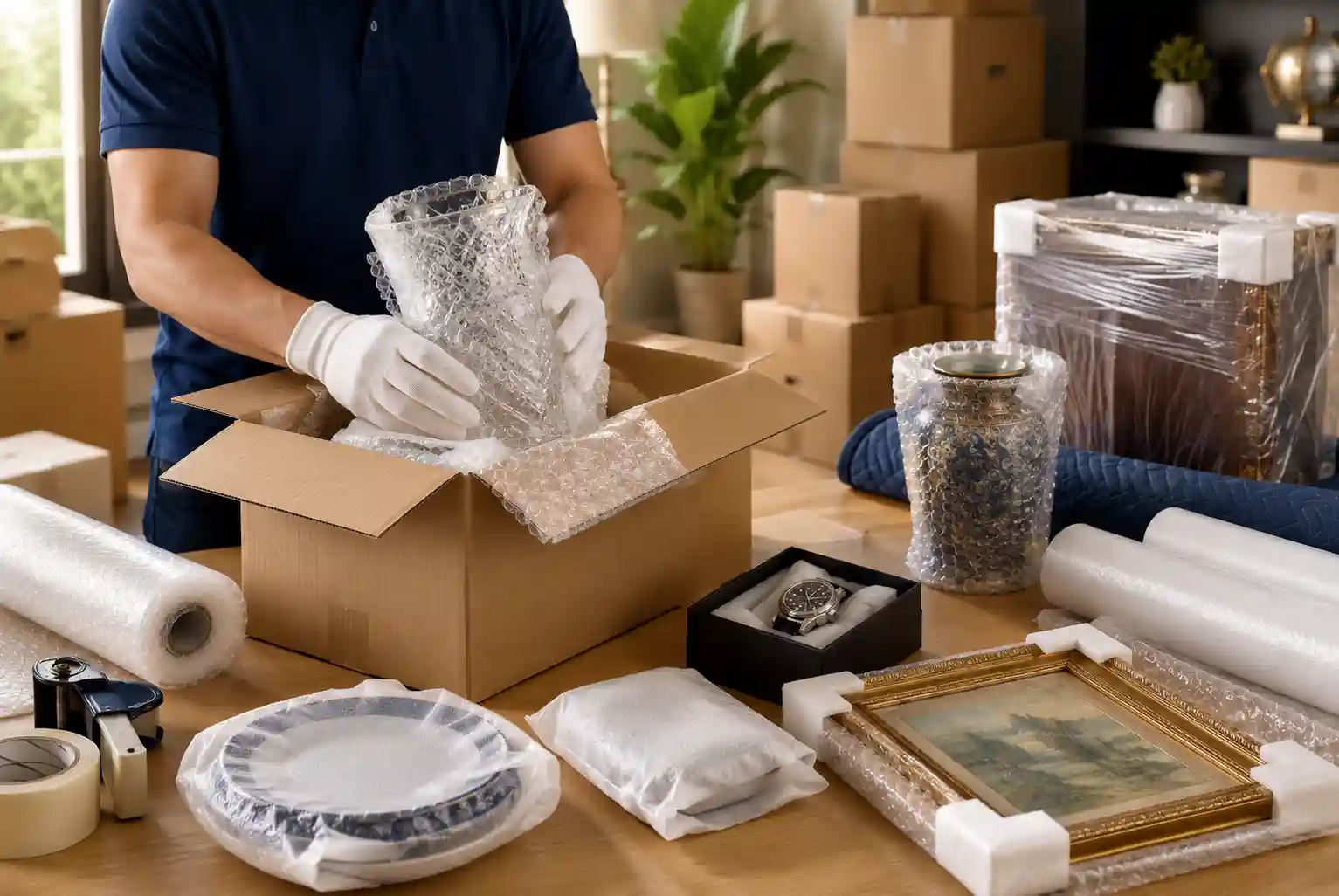
High-quality corrugated boxes form the foundation of safe packing. Single-wall cartons may be fine for books or clothing, but double-wall or heavy-duty corrugated boxes are essential for fragile items. They offer greater structural integrity and crush resistance.
The double-boxing technique adds an extra layer of protection. The item is packed securely in one box, which is then placed inside a larger box with cushioning material filling the gap between them. This absorbs external shocks before they reach the contents.
Bubble wrapping standards matter more than most people realize. Use bubble wrap with the bubbles facing inward toward the item, and secure it with packing tape. Multiple layers are recommended for delicate surfaces. Avoid using newspaper directly on items with painted or polished surfaces, as ink can transfer.
Foam cushioning and void fill materials such as foam peanuts, air pillows, or crumpled packing paper should fill every empty space inside a box. Voids allow items to shift during transit, which is a leading cause of breakage.
Corner protectors and edge guards are indispensable for framed artwork, mirrors, and furniture. These foam or cardboard accessories absorb impact at the most vulnerable points of any item.
Stretch wrapping is widely used by professional packing services to protect furniture surfaces, bundle loose items, and secure moving blankets around large pieces.
Packing Techniques for Different Valuable Items
Glassware and Crockery
Each piece should be individually wrapped before being placed in the box. Plates travel best when packed vertically, like records in a crate, rather than flat. This orientation distributes weight more evenly and significantly reduces the risk of cracking. Line the bottom of the box with at least three inches of cushioning before placing any items inside.
Electronics and Appliances
Whenever possible, use the original manufacturer’s packaging. These boxes are custom-molded for the exact dimensions and weight of the device and offer the best protection. If original boxes are unavailable, use anti-static bubble wrap to prevent static discharge damage, and organize cables separately in labeled bags to avoid tangles and confusion during unpacking.
Artwork and Mirrors
Custom wooden crates are the gold standard for high-value item relocation involving artwork. For standard moves, use glassine paper first to protect the surface, followed by bubble wrap, and then place the item in a mirror box or picture box sized to fit snugly. Corner protectors are non-negotiable for framed pieces.
Furniture and Antiques
Surfaces should be protected with moving blankets, furniture pads, or foam padding secured with stretch wrap. Disassemble what you can, and label every bolt, screw, and component clearly. For irreplaceable antiques or heavy wooden pieces, wooden crating offers the highest level of protection and is a standard used by professional movers handling high-value item relocation.
The Importance of Proper Labeling
Labeling is one of the most overlooked elements of safe packing techniques, yet it plays a critical role in protecting your belongings.
Every box containing fragile items should be clearly marked with “FRAGILE” stickers on all sides and on top. Add “THIS SIDE UP” arrows to ensure handlers know the correct orientation. Avoid marking only one side, as boxes are often turned or stacked in different positions.
Maintain a detailed inventory checklist. Number each box and log its contents. This not only helps with unpacking but also allows you to quickly identify missing or damaged items, which is especially important when filing an insurance claim.
Common Packing Mistakes to Avoid
Even well-intentioned packers make errors that lead to damage. Here are the most frequent ones:
- Overpacking boxes makes them too heavy to handle safely and increases the chance of the box bottom giving out.
- Using low-quality cartons from grocery stores or liquor shops offers minimal structural protection and is a false economy.
- Insufficient cushioning is the single biggest cause of transit damage. When in doubt, add more padding.
- Mixing heavy and fragile items in the same box is a recipe for breakage. Always keep fragile items separate.
- Ignoring weather protection is a mistake especially during monsoons or winter moves. Use plastic wrap or waterproof bags for sensitive items and seal box tops fully with quality tape.
When to Hire Professional Packers and Movers
Some moves genuinely call for expert hands. If your home contains a significant number of fragile, antique, or high-value items, investing in professional packing services is one of the smartest decisions you can make.
Experienced movers and packers bring specialized materials, trained handling techniques, and industry knowledge that most individuals simply do not have. They understand how to pack items to withstand long-distance transit, how to disassemble and reassemble complex furniture, and how to document inventory for insurance purposes.
Professional teams also save you considerable time and reduce the mental load of figuring out the correct technique for every different type of item. For corporate transferees or families on tight relocation timelines, this alone makes the investment worthwhile. When choosing a service provider, refer to a reliable packers and movers selection guide to verify credentials, experience, and customer reviews.
Additional Safety Tips for High-Value Item Relocation
A few final but important household shifting tips to round out your preparation:
Photograph every valuable item before packing. Date-stamped photos provide critical evidence in the event of damage claims.
Maintain a written inventory checklist for all high-value items, including serial numbers for electronics and appraised values for jewelry or artwork.
Consider relocation insurance. Standard mover liability rarely covers the full replacement value of expensive belongings. A dedicated relocation insurance policy closes that gap. Explore your options before moving day.
Keep essential valuables with you. Jewelry, important documents, irreplaceable heirlooms, and items of extreme sentimental value should travel in your personal carry rather than in the moving truck.
Verify your mover’s credentials. Confirm licensing, insurance coverage, and any relevant certifications before signing a contract. A reputable moving company will have no hesitation providing this information.
Conclusion
Moving fragile and high-value items safely is not a matter of luck. It is about preparation, the right materials, and the right knowledge. By following industry-approved packing standards, avoiding common mistakes, and knowing when to call in professional help, you can protect your most treasured belongings through every stage of the relocation journey.
Whether you are planning a local household shift, a cross-country move, or an international relocation, the principles remain the same: use quality materials, pack with care, label thoroughly, and never cut corners on items that matter most.
Your belongings have value, both financial and personal. They deserve to arrive at your new home in exactly the condition they left your old one.

