
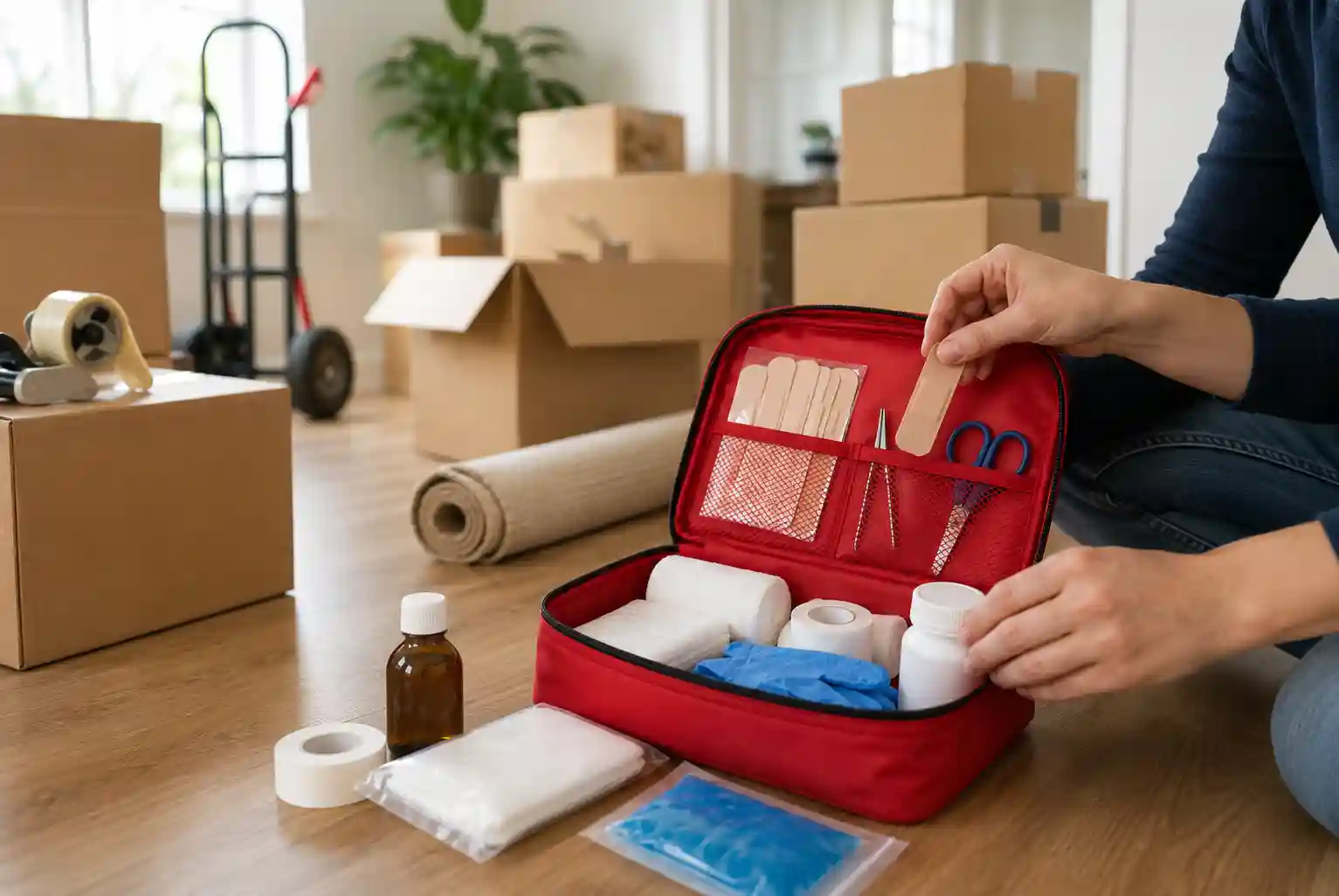
Moving day is busy and full of surprises. Boxes are heavy, floors get cluttered, and everyone is moving fast. Small accidents like cuts, bruises, and sprains happen more often than people expect. That is why a moving day first aid kit is one of the most important things to prepare before your relocation. This guide explains exactly what to pack in your first aid kit for moving day, why each item matters, and how to handle common injuries safely. Whether you are packing yourself or hiring packers and movers, having the right supplies ready can turn a stressful moment into a quick, manageable one.
Why a First Aid Kit Is a Must-Have on Moving Day
Moving involves heavy lifting, sharp tools, and a lot of walking through tight spaces. This mix creates real risks. Boxes can have sharp edges. Furniture can pinch fingers. Floors can be slippery from packing tape or bubble wrap.
A well-stocked moving day safety kit means you do not have to stop everything and rush to a pharmacy for a small cut or a headache. It saves time, reduces stress, and keeps the move on schedule. For families with children or elderly members, this becomes even more important, since minor accidents can happen while everyone is distracted with packing.
What Should Be in Your Moving Day First Aid Kit
A good essential first aid kit for moving does not need to be complicated. It should cover wound care, pain relief, and basic safety tools. Here is a simple breakdown.
Wound Care Essentials
- Adhesive bandages in different sizes, for small cuts and scrapes
- Sterile gauze pads and a roll of medical tape, for deeper cuts
- Antiseptic wipes or antiseptic liquid, to clean wounds before bandaging
- Antibiotic ointment, to prevent infection in small wounds
- A pair of tweezers, to remove splinters from wooden furniture or crates
- Disposable gloves, to keep hands protected and wounds clean while treating others
Pain Relief and Medicines
- Basic pain relief tablets, such as paracetamol, for headaches and muscle pain
- An anti-inflammatory cream or spray, for sprains and muscle strain
- Oral rehydration salts (ORS), useful during hot weather moves
- Any personal prescription medicines that family members need daily
Always check medicine expiry dates before moving day. Keep this section of the kit separate and clearly labelled, since it is the part people reach for in a hurry.
Tools and Protective Items
- A small pair of scissors, for cutting tape, gauze, or bandages
- An instant cold pack, for swelling from bumps or sprains
- A digital thermometer, in case someone feels unwell during the move
- A CPR face shield or basic emergency instruction card, for serious situations
- A torch or small flashlight, useful in dark storage areas or during power cuts
Common Moving Day Injuries and How to Handle Them
Knowing what usually goes wrong helps you prepare better. Here are the most common moving day injuries and simple steps to handle them.
Cuts and Scrapes
Clean the area with an antiseptic wipe. Apply antibiotic ointment. Cover with a bandage or gauze. Seek medical help if the cut is deep or does not stop bleeding after ten minutes of pressure.
Back Strain and Muscle Pulls
These happen from lifting heavy boxes the wrong way. Stop lifting immediately. Rest the area and apply a cold pack for the first 24 hours. If the pain is severe or does not improve, see a doctor.
Sprained Ankles or Wrists
Use the R.I.C.E method: Rest, Ice, Compression, and Elevation. Wrap the joint gently, keep it raised, and avoid putting weight on it until the swelling reduces.
Pinched Fingers
Common when moving furniture through doorways. Apply a cold pack right away to reduce swelling. If the nail turns black or the finger looks deformed, visit a doctor to rule out a fracture.
Where to Keep Your First Aid Kit During the Move
A first aid kit is only useful if you can find it quickly. Follow these simple rules:
- Pack the first aid kit last, so it does not get buried under other boxes.
- Use a bright, clearly labelled box or bag, such as red or bright yellow.
- Keep it in the vehicle you are travelling in, not inside the moving truck.
- Tell every family member or helper where the kit is kept.
- Keep a printed list of emergency contact numbers inside the kit, including your doctor and the nearest hospital.
Tips to Avoid Injuries on Moving Day
Prevention is always better than treatment. A few simple habits can reduce accidents on safe moving day significantly.
- Wear closed shoes with good grip, never slippers or sandals
- Lift with your knees, not your back, and ask for help with heavy items
- Keep walkways clear of loose wires, tape rolls, and packing material
- Take breaks and stay hydrated, especially during summer moves
- Use furniture dollies or sliders for heavy items instead of dragging or lifting alone
- Keep children and pets in a separate, safe room while boxes and furniture are being moved
Why Professional Relocation Services Can Help
Hiring professional relocation services can lower the risk of moving day accidents in the first place. Trained packing teams know how to lift heavy furniture safely and use the right equipment for bulky or fragile items.
Professional movers usually offer:
- Trained staff for safe lifting and loading of heavy items
- Proper packing materials to reduce the chance of cuts from broken glass or sharp edges
- Organised transportation, so fewer people are handling boxes at once
- Shipment tracking, so you know where your belongings are at every stage
- Insurance assistance, for peace of mind in case of damage
- Help with documentation, especially for interstate or international moves
- Door-to-door service, which reduces the physical strain on you and your family
This does not remove all risk, and a basic first aid kit for moving day is still a good idea even with professional help. But it does reduce how much heavy lifting and handling your family has to do directly, which is where most injuries happen.
Frequently Asked Questions
What is the most important item in a moving day first aid kit?
Adhesive bandages and antiseptic wipes are the most used items, since small cuts and scrapes are the most common moving day injuries. Along with these, keep basic pain relief tablets and a cold pack ready for muscle strain or swelling.
Do I need a first aid kit if I hire packers and movers?
Yes. Even with professional relocation services handling the heavy work, family members can still get minor injuries while walking around boxes or handling smaller items. A basic kit takes little space and is worth keeping nearby.
How do I treat a back strain from lifting boxes?
Stop lifting immediately and rest. Apply a cold pack to the area for the first 24 hours to reduce swelling. If the pain does not improve within a day or two, or if it is severe, consult a doctor rather than continuing to lift.
What should I do if someone gets a deep cut on moving day?
Apply firm pressure with a clean cloth or gauze to stop the bleeding. If bleeding does not stop after ten minutes, or the cut is deep, go to the nearest hospital. Do not try to close a deep wound at home.
Where should I keep the first aid kit while moving?
Keep it in the vehicle you are travelling in, not packed inside the moving truck. Pack it last so it is easy to reach, and use a bright, clearly labelled bag or box so anyone can find it quickly.
What medicines should be included in a moving day kit?
Basic paracetamol for pain and fever, an anti-inflammatory cream for sprains, oral rehydration salts for hot weather, and any personal prescription medicines your family needs daily. Always check expiry dates before moving day.
Conclusion
A moving day first aid kit is a small investment that can save you a lot of trouble. Cuts, sprains, and muscle strain are common during a move, and having the right supplies ready means you can handle them quickly instead of letting them disrupt your day. Pack wound care items, basic medicines, and a few simple tools; keep the kit easy to find, and follow safe lifting habits throughout the move. Combine this with professional relocation services where possible, and your move is far more likely to stay safe, smooth, and on schedule.

